
Leadership Reimagined, One Woman at a Time Model
Benjamin Mudahera January 2026
Leadership is often framed in terms of vision, influence, or scale. Yet across many contexts, especially where resources are limited and responsibilities are heavy, leadership is learned in quieter ways, through interruption, endurance, and faithfulness practiced without certainty. At the Women’s Institute, we engage stories of women whose leadership is formed at the intersection of faith, context, and practice, believing these stories speak not only to our academic community, but to a global audience navigating leadership in complex realities.
Recently, we had the opportunity to engage in conversation with Jane Thuo, Founder and Managing Director of Dorcas Creation Kenya (https://www.dorcascreation.or.ke). Her journey offers a compelling lens for rethinking how leadership is formed, sustained, and multiplied, not through speed or visibility, but one woman at a time.
Hidden Beginnings
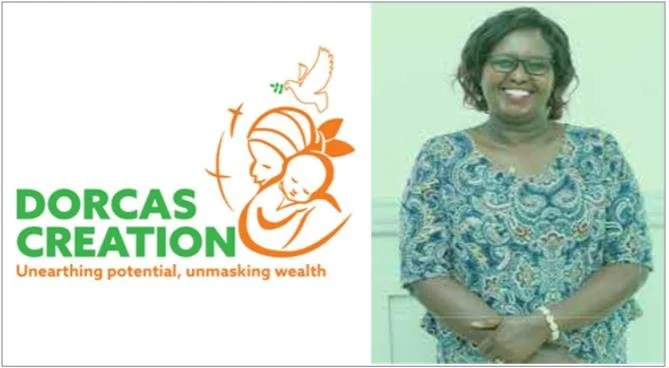
Jane’s leadership journey did not begin with confidence or clarity. As a teenager, she was not allowed to continue to go to school because her transfer papers were lost when her dad moved to a new city for work. For two years, she remained at home without education, documentation, or a clear path forward. Her days were spent herding livestock, work that carried social stigma and quiet shame for a young girl.
Yet this season became formative. Carrying a Bible into the fields, Jane prayed honestly, often without answers. Reading the biblical story of David, another overlooked shepherd, she sensed that her life might not be defined by her current limitations. Looking back, she recognizes that leadership was being shaped internally long before it was ever recognized publicly.
For us, this raises an important reflection: leadership formation often begins in obscurity. For many women, calling is forged not in moments of affirmation, but in seasons of waiting, endurance, and unseen faithfulness.
Compassion Tested
After two years a friend of Jane’s father intervened on her behalf and made it possible for her to continue her education. Although her friends had already graduated, she persevered. She finished High School and then she went to university where she participated in a campus ministry. When Jane graduated, she began working full-time with that ministry and found herself walking closely with women living in extreme vulnerability. They gathered for prayer and Bible study, bringing stories of hunger, violence, debt, and survival.
At some point, Jane realized that compassion alone was insufficient. Prayer needed pathways. Care needed structure. She began asking a different leadership question: What does this woman need right now to regain dignity and stability?
Dorcas Creation initially began in her house with beadwork and jewelry-making, a familiar entry point in many holistic mission settings. While helpful, Jane noticed its limits. Jewelry could supplement income, but it rarely sustained households facing rent, school fees, food insecurity, and medical needs. Compassion, she learned, must sometimes be tested, and reshaped, by lived reality.
Deliberate Care
What emerged over time is what Dorcas Creation Kenya now practices intentionally: a one woman at a time approach to leadership and transformation.
Rather than rushing women through programs or prioritizing numbers, the organization centers each woman’s pace, dignity, and lived reality. Healing, skills training, and discipleship are integrated rather than sequenced. Progress is measured not by speed, but by stability. Over time, women who were once supported often become the ones supporting others.
This model challenges efficiency-driven approaches to leadership and development. It invites a deeper question for leaders across contexts: What might change if we valued depth before scale, and formation before outcomes?
Unseen Struggles
The women Dorcas Creation serves live with layered challenges: unemployment linked to limited education, gender-based violence, early marriage, teenage pregnancy, food insecurity, and restricted access to healthcare.
For mothers of children with disabilities, the burden is often heavier still. Disability is frequently interpreted as a curse. Many women are abandoned by spouses and rejected by extended family. Childcare options are scarce. Therapy and medication are costly. Emotional exhaustion becomes constant.
Dorcas Creation responds not with quick fixes, but with presence. Women receive skills training while their children receive care. They pray together. They share stories. Sometimes they laugh, often at business ideas that did not work the first time. Leadership here is not hierarchical. It is relational, patient, and grounded in accompaniment.
As the work has grown, practical constraints have also become clearer. Transportation remains a challenge. Without a dedicated vehicle, outreach and follow-up often depend on irregular arrangements. This reality does not weaken the vision, but it shapes how leadership is practiced in constrained environments, an important insight for leaders working in global and resource-limited contexts.
Hope Interrupted
One story Jane shared captures the depth of this work. A mother, overwhelmed and isolated, caring alone for a child with severe disabilities, reached a breaking point. In her despair, she later shared how she once believed both she and her child had reached the end. She was going to take her child’s life. Then something unexpected happened. The child, who had never spoken, looked at her and said one clear word: Mom.
That moment became a turning point. The mother later connected with Dorcas Creation, began receiving support, and slowly rebuilt her life. Today, she works at the center, welcoming other women who arrive carrying similar burdens.
Jane shares the story not for shock. She shares it because it reveals how leadership grounded in presence can interrupt despair and create space for life to begin again.
Faith Sustained
Jane describes her faith simply. Prayer is not added onto the work; it shapes its rhythm. Faith provides meaning when solutions remain incomplete. She reflects that poverty often flows from broken relationships, with God, with oneself, and with others, and that healing must therefore be relational.
Over the years, thousands of women have walked through Dorcas Creation’s programs. Some have become entrepreneurs, teachers, pastors, and founders of initiatives of their own. Many have come to faith in Christ. Jane speaks of these outcomes with humility, aware that leadership is sustained as much by grace as by effort.
Leadership Reimagined
For us at the Women’s Institute, and for whoever is reading this across the world, Jane Thuo’s story invites reflection rather than imitation. What might leadership look like if we measured faithfulness not by speed, but by depth? How might women’s leadership be formed differently if we allowed space for interruption, discernment, and relational practice?
Scripture reminds us, “I have come so that they may have life, life in all its fullness” (John 10:10, GNB). Jane’s journey suggests that fullness of life often arrives gradually, through action, patience, and leadership practiced one woman at a time. In a world drawn to scale and efficiency, this model offers a countercultural vision of leadership, quiet, courageous, and deeply transformative.