
Climate Bible Studies
A Resource from The Eden Vigil Institute of environmental leadership
Below you will find Bible studies about climate action authored by Lowell Bliss, the Director of The Eden Vigil Institute of Environmental Leadership. We hope you find them encouraging and helpful in your personal journey or as you gather in like-minded community to seek God over this important topic. For more resources and opportunities to connect, visit the Eden Vigil Institute of Environmental Leadership.
2025

“In an age where fossil fuel production is so obviously a curse to God’s creation, even my children’s generation is a witness to BP walking in the way, the error, and the teaching of Balaam.”

“Neither the U.S. nor Canada are either the David or Goliath of I Samuel 17. David and Goliath are the David and Goliath. And the flawed sinfulness that we see in David’s relationship to Bathsheba, Uriah, and his children is likely present in this story too, if we lay down the hero/villain hermeneutic and poke around some.”

Lowell reflects on revisiting An Inconvenient Truth, re-evaluating its insights, and recharging activism for 2025. He explores the unchanged realities of climate action, a renewed call for radical efforts, and the power of prayer to inspire strength and persistence. Al Gore’s message of 'tireless work' resonates deeply, challenging us to move forward prophetically and tirelessly in the fight against climate change.
2024

This critique of COP29 in Baku draws on Matthew 25 to challenge the event's superficial approach to climate justice. It describes the conference as a "whitewashed tomb" that failed to address systemic issues and the needs of the vulnerable. The piece urges a deeper reflection on true climate action and advocates for a more authentic, impactful response that aligns with biblical teachings on justice and care for the marginalized.

In this article, we explore how Abraham’s negotiation with God in Genesis 18 offers profound insights into leadership, hospitality, and environmental stewardship in the context of modern global challenges like climate change. Abraham's intercession for the cities of Sodom and Gomorrah reveals the moral responsibility to advocate for justice, a call that resonates today in addressing the pressing issues of climate action and sustainable solutions at global conferences like COP29. Discover the lessons that transcend time and inspire today’s environmental leaders.

This article examines Michael the Archangel as a symbol of divine advocacy for creation, drawing insights from Revelation 12. It highlights the spiritual dimensions of climate justice, emphasizing humanity’s role in caring for the earth amidst global crises. Through theological reflections, it calls readers to action grounded in faith and responsibility.


Reflect on the parallel between Jairus's plea for his dying daughter and the urgent call for climate action. Explore the spiritual and emotional dimensions of climate change, and how prayers for our planet echo the earnestness of Jairus's prayer. Join the discussion on eco-realism and re-imagined faith for a sustainable future.

I remember when the City of Atlanta was anxiously watching its reservoir levels drop in 2007, much like what Bogota, Colombia is doing now... But there is something uniquely unsettling about when a municipality projects a “Zero Day” for their water supply, as Cape Town, South Africa did in 2018.

When the prophet Isaiah begins what is famously recorded in Isaiah chapter 6 with the words, “In the year that King Uzziah died. . .“ he was certainly locating his vision historically. This is likely the year 740 BCE. Yet, Isaiah may also have been locating his vision emotionally.

"For the last few years, I have been trying to communicate with leaders of various Christian churches to urge them to bring protection and conservation of the environment into the mainstream of their faith and their teachings. I have been suggesting that Easter Monday could be a very good day for the entire Christendom to plant trees." - Wangari Maathai

One of my recent essays is “Eight Things I Discovered About Loving Your Enemies at COP28” which features a moral framework (provided by Jesus in Matthew 5 and Luke 6) and a strategic framework (provided by Martin Luther King). At one time, Morrison would have been listed as a climate enemy under the category of Obstructionist Government” or “Powerful Denier.” Australia’s Climate Council characterized the track record of the Morrison Government, at the time of COP26 in Glasgow, as “blocking global collaboration on climate action; promoting the extension and expansion of fossil fuels like coal, oil, and gas; and refusing to step up and set ambitious climate goals.” They claim that, of all Paris Agreement signatories, Australia sat at “dead last” when it came to its new emission reduction targets.

2023

In the end, the conscience-stricken David brings the subject of enmity back around. “May the Lord judge between you and me,' he yells at Saul from a safe distance, 'And may the Lord avenge the wrongs you have done to me, but my hand will not touch you.… May the Lord be our judge and decide between us. May he consider my cause and uphold it; may he vindicate me by delivering me from your hand.”


There’s a part of Jesus’s story in Luke 19—there’s some debate over whether it qualifies as a parable—that is about human solidarity. It begins in what we might call the ‘here and now’ with a certain rich man clothed in finery and eating the best food. A beggar named Lazarus, covered in sores, sits right outside his house.
Jacob was fleeing the wrath of his brother Esau and the disappointment of his father Isaac, when he 'stopped for the night because the sun had set' (v.10). The 'certain place' he had reached was named Luz, which according to the name apparently refers to an almond grove. In a fact that never failed to amaze us Sunday School kids as much as the glorious ladder did: Jacob took a stone and used it as a pillow!
The global stocktake (GST) at COP28 will be the first conducted since the Paris Agreement went into full effect and began its five-year cycles. In the third year of a cycle, the parties will conduct this 'inventory' of 'where they’re collectively making progress' on the Paris Agreement goals. Two years later, they will return to the COP (in this case COP30 in 2025) and bring more ambitious targets for emissions reductions, based on what the GST reveals.

Jesus died for us. We often need to be reminded that he also lived for us. I don’t simply mean that he lived long enough to articulate for us a set of teachings, as wonderful an accomplishment as that is. I mean that in his incarnation, in his en-flesh-ment, as an embodied being embedded in creation, Jesus showed us how to be a human being. This month’s theme prayers for Climate Intercessors will feature the role that plastics—its production and its pollution—play in climate change. Jesus showed us how to be a consumer. Read More.

Cataclysms and bad news aren’t the only things that can cascade. So can thoughts and memories and connections. I remembered that the first time I had ever heard about the possible collapse of what is called the global ocean conveyor belt was in Al Gore’s 2006 documentary, An Inconvenient Truth.

Excerpt: There is no doubt about it, John 11 is the story of a miracle. Jesus calls Lazarus forth from the grave and it is another one of Jesus’s seven signs in this gospel that he is divine, another occasion for one of his seven I AM statements, in this case, “I am the resurrection and the life.” I will begrudge no one in our Climate Intercessors prayer network who wants to pray for the miracle of preventing a 1.5°C warming. Yet, as I read John 11, while it is obviously the story of a miracle, I don’t believe it is a story about miracles. It is about death and life, and about how in Jesus we live, and breath, and have our being even unto eternity. Read More.
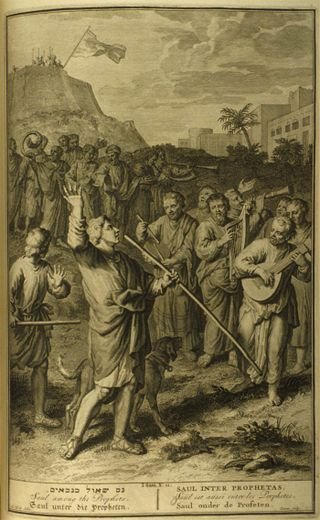
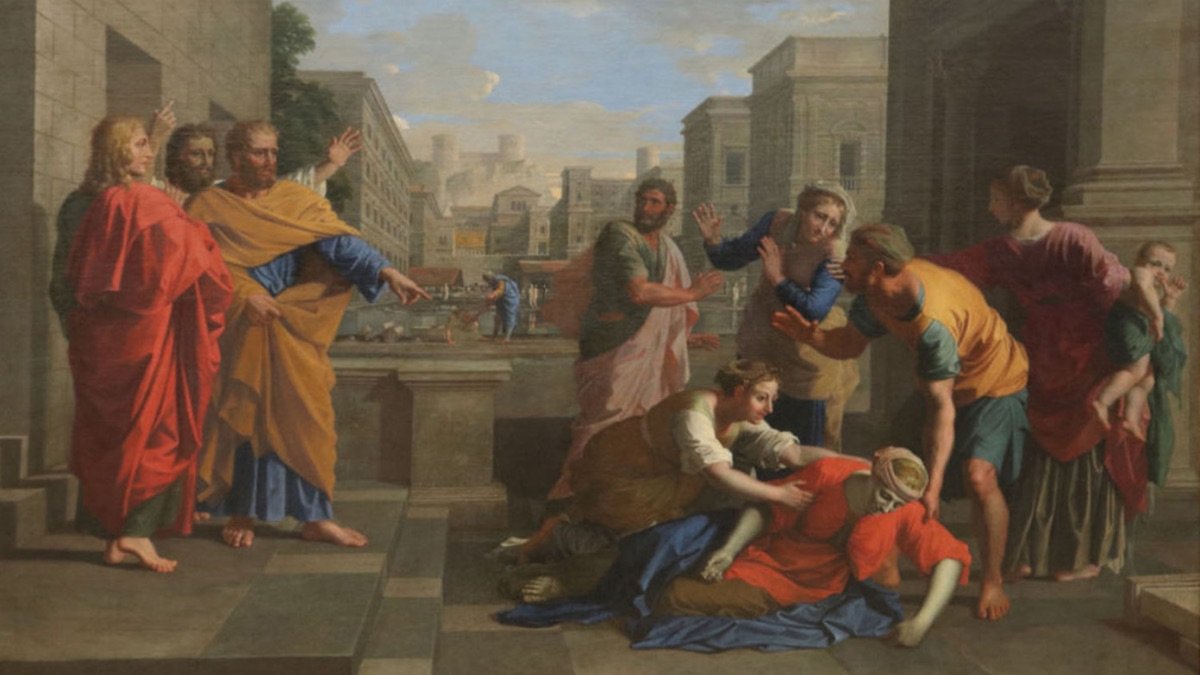
2022
!["Out of [Sharm el-Sheik] Egypt I Called My Son."](https://images.squarespace-cdn.com/content/v1/5e2f5d8cd37183442b006cae/2ac9672a-f552-4c9f-a3be-8a2011893198/c612b813-23cb-c199-0257-1a3547e59b4a.jpeg)


Deuteronomy is about the 'treaties' that we make with God that supersede any treaty, like the Paris Agreement, that nations make with each other. Its stated motivation behind its restatement of the Ten Commandments is markedly humanitarian. And its theme that 'the past is always present' should encourage us that God is still as active in 2022 as he was when the shekinah glory fell on Moses.
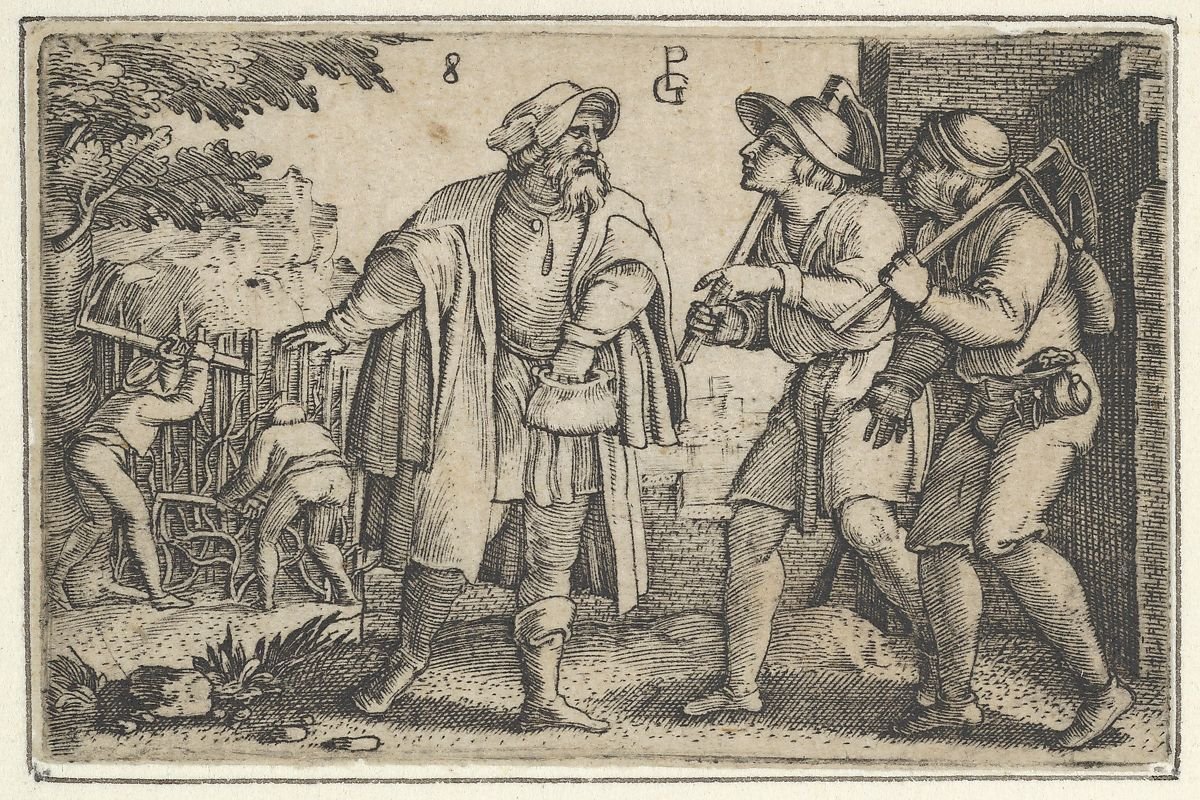
Explore the significance of Jesus's Parable of the Two Sons in the context of global climate action at COP27. Learn how countries like Australia and the USA can pivot from inaction to meaningful engagement. Join Climate Intercessors in strategic prayer, seeking divine guidance for impactful decisions at COP27. Read on for insights and join our global prayer meetings.

In 2013, a chance encounter and Psalm 77 sparked a vision for climate action. Explore how this ancient text continues to inspire our pathway to COP27 in Sharm el-Sheik, Egypt.


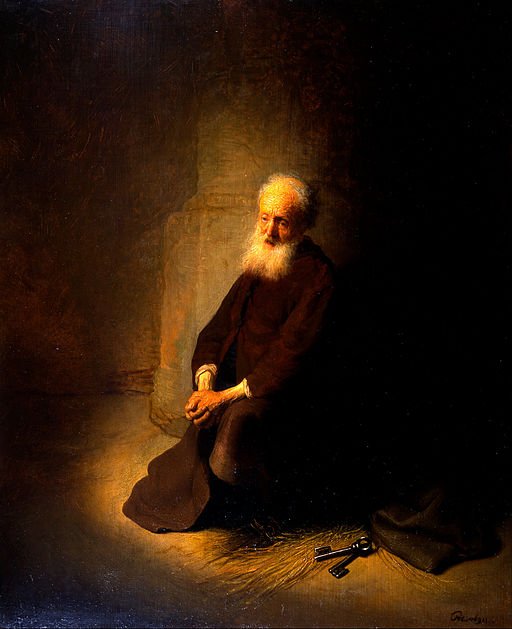
In Acts 4, Peter and John's overnight jail time prompts reflection amidst early church fervor. As we face climate challenges, we echo their prayers for courage and divine intervention: 'All the believers lifted their voices together in prayer to God.


![A Sheet Big Enough to Lower the Planet [and Her Temperature] (Luke 5:17-26)](https://images.squarespace-cdn.com/content/v1/5e2f5d8cd37183442b006cae/ec1a7cb1-bb0c-4c13-9d8b-bd97f9a90447/758bb375-2912-756c-daef-9a08e396f64b.jpg)


“What do we do when the money we are advocating for to help finance climate mitigation and adaptation, or to fund loss and damage, just isn’t coming in?”